

The second half of 2025 has been a period of significant technical and operational growth for O-CEI Pilot 6 – Smart re-charging and efficiency of robot tractors in large fruit production fields. This pilot aims to transform the traditional fruit farming (with a focus on kiwi plantations) into a high-tech, data-driven operation by replacing conventional machinery with a smart, autonomous tractor. In these dense plantations, the pilot utilizes the ZETRABOT, an electric robot designed to navigate the unique layout of kiwi crops while performing agricultural tasks with minimal human intervention.
Evolution of the ZETRABOT: From Prototype to Field Trials
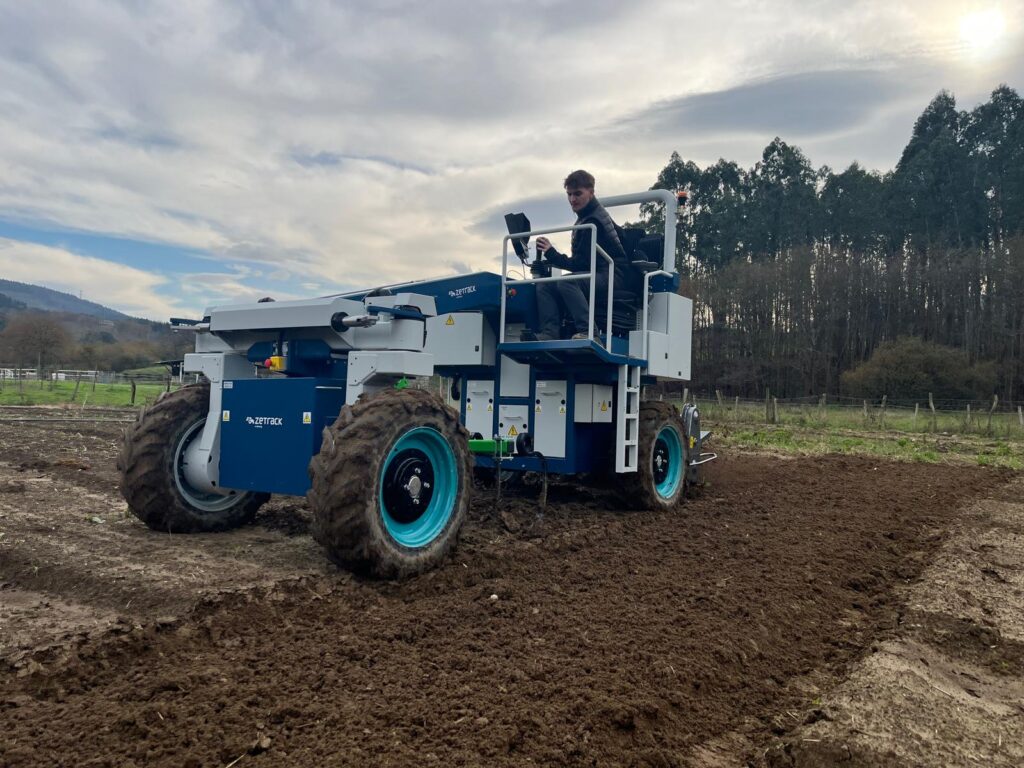
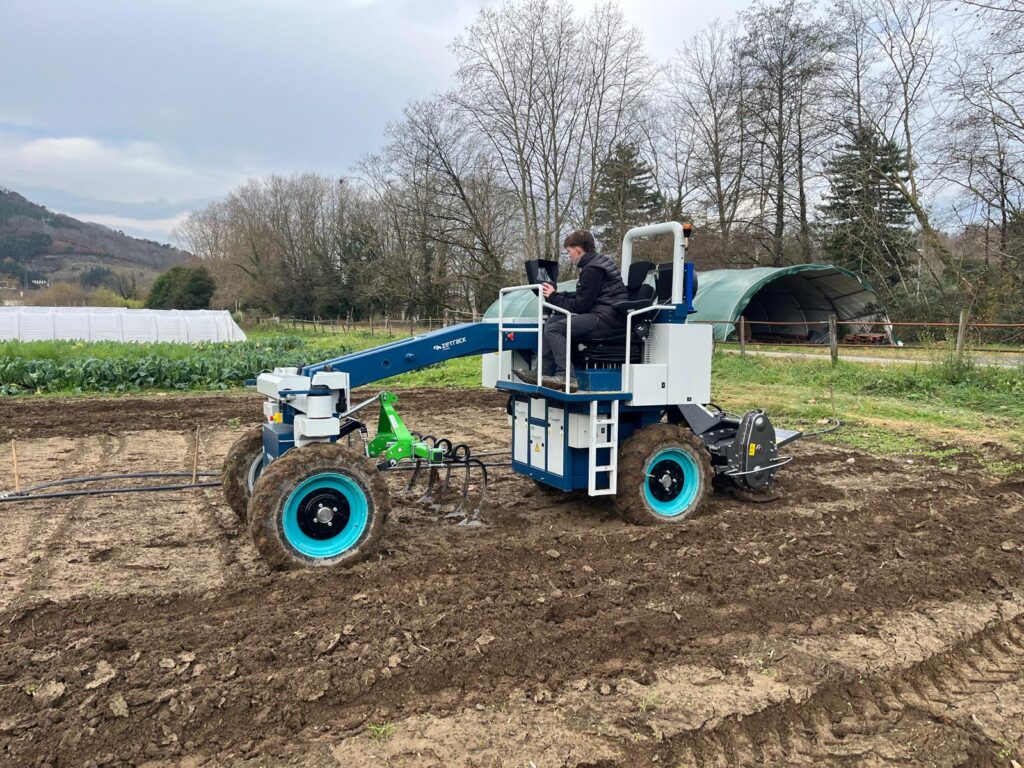
The core of Pilot 6 is the tractor itself, and the latter half of 2025 saw the consolidation of ZETRABOT 1.1 as a fully functional prototype. The team finalized the vehicle’s technical definition and made substantial leaps in electronic and software integration, including the Human-Machine Interface (HMI), safety logics, and Power Distribution Unit (PDU).
A structured testing plan was executed across laboratory environments, test tracks, and real field conditions using various agricultural implements. These trials allowed researchers and growers to validate use-case scenarios, collecting essential data on energy consumption, manoeuvrability, and implementing compatibility. This phase has laid the critical foundations for autonomous driving and remote monitoring, preparing the ZETRABOT for its next iterations of autonomous field performance.
Transforming the Plantation: Data-Driven Agriculture
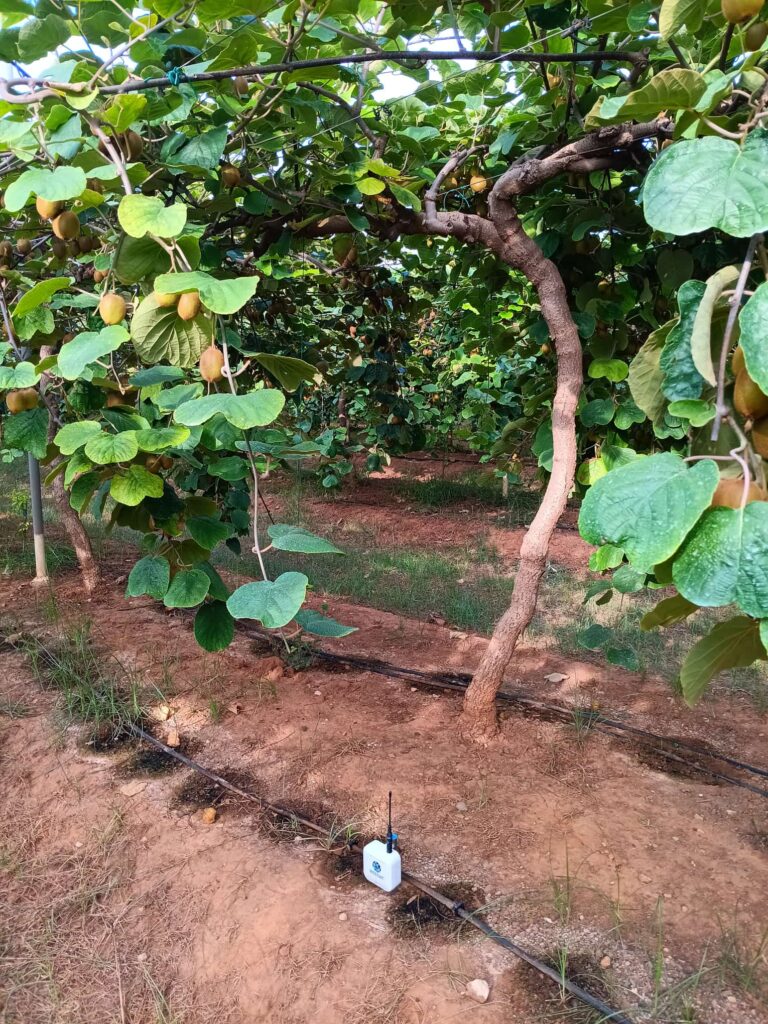
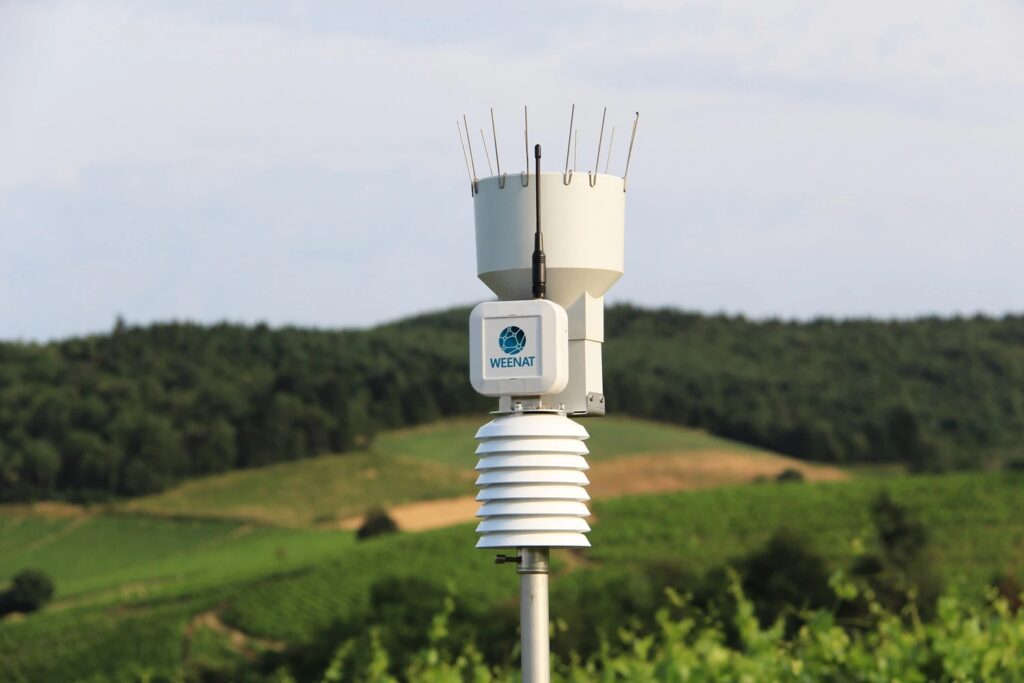
Practical implementation is already taking shape on the ground. Work has continued on adapting the project’s primary test site (a large kiwi plantation) by introducing advanced sensors and equipment designed to feed critical environmental data into the Pilot application.
Currently, two interconnected digital systems have been installed to monitor farm conditions in real time. First, digital tensiometers have been installed to help monitor soil moisture levels and thus better manage irrigation on the farm. Second, a weather station has been installed to provide accurate data on the meteorological conditions on the farm, which is very useful when making decisions about the suitability of carrying out agricultural operations with the tractor.
Both systems generate vast amounts of data accessible through a unified mobile application, allowing growers to make informed decisions based on interrelated environmental insights.
Outreach: Engaging the Agricultural Sector
Beyond technical development, Pilot 6 has been active on the global stage to find new partners and share its vision for a greener agricultural future. The team attended two of the most influential trade fairs in the sector: Fruit Attraction in Madrid and Agritechnica in Hanover.
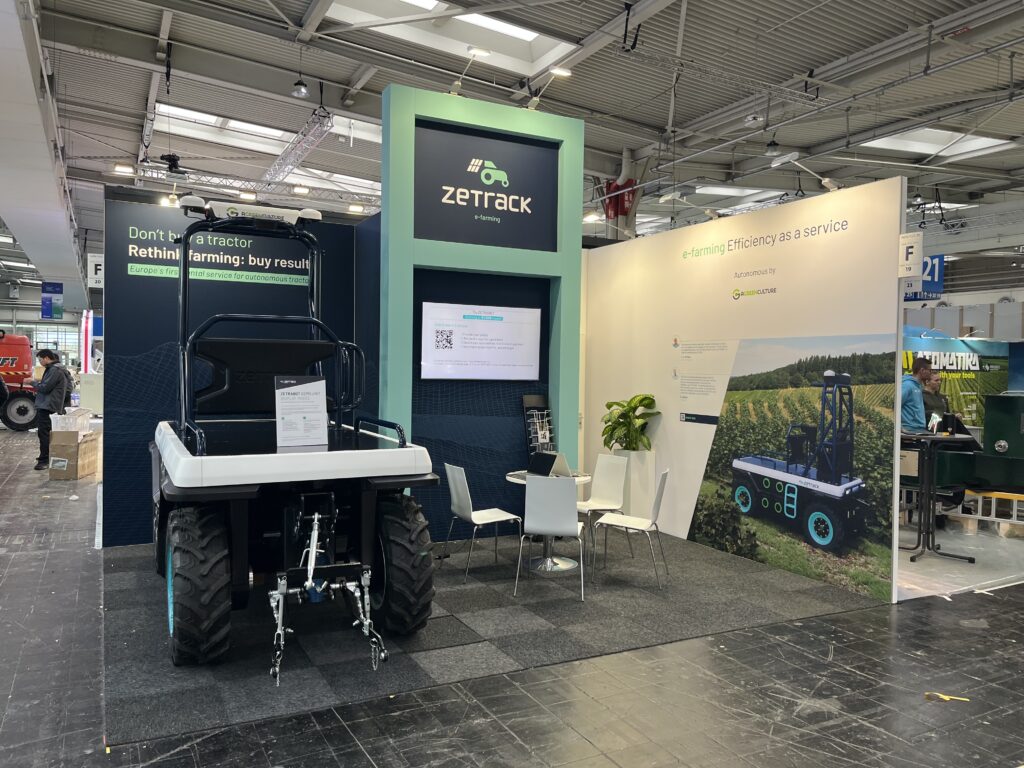
At Agritechnica, Zetrack presented the Zetrabot 1.1, equipped with removable batteries (Picture 5). A major highlight was the introduction of Zetrack’s Battery-as-a-Service (BaaS) model. Together with leading partners and specialists, Zetrack implemented an innovative system of interchangeable, rentable batteries for agricultural vehicles. This approach replaced fixed-capacity battery designs, typically more expensive and less flexible, with a model that allows farmers to adapt energy autonomy to real operational needs. With additional batteries available for rent only, when necessary, the solution reduced total ownership costs while supporting zero-emission farming practices.
The successful integration of soil sensors, weather monitoring, and the advanced ZETRABOT 1.1 prototype marks a turning point for Pilot 6. By combining robotics with real-time field data, the pilot is not just building a tractor; it is creating a smarter, more sustainable ecosystem for the future of fruit production.