
Publication: Proceedings of Science
Authors: J. White*, R. Dupuis, M. Salimi Khanghah and K. Skaburskas
*: corresponding author
Doi: https://doi.org/10.22323/1.523.0030
Link to paper: https://pos.sissa.it/523/030/pdf
Abstract:
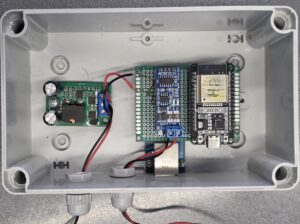
This paper presents a data-driven analysis of residential electricity consumption in the Swiss pilot of the O-CEI project (Pilot 8), using high-frequency (4~Hz) measurements from a household electricity load monitor, including active and reactive power.
We describe a practical event-labelling pipeline based on sliding-window Student’s t-tests and appliance-specific power/time constraints and use the resulting labels to train a supervised classifier for appliance detection.
A random-forest model is evaluated on test data, showing high recall for kettle events (0.9478) but moderate precision (0.5001), highlighting the impact of class imbalance and noted imperfect automated labels.
Beyond foreground appliance detection, we discuss the identification of recurring background loads via spike–steady-state–drop signatures to improve the classifier’s performance and enable a more comprehensive understanding of household energy consumption patterns.
The paper concludes with a discussion of the implications of these results for flexibility-oriented analysis.
Relevance of the Paper to the Project:
The paper supports O-CEI’s work on energy flexibility by exploring how high-frequency household electricity data can be used to identify appliance-level consumption patterns. These insights can help improve understanding of residential energy use and inform the development of flexibility-oriented applications.