
NGSI-LD Plugtests

Loading Events

EVENT

NGSI-LD Plugtests

DETAILS

Date & Time

February 24 - February 28

Event organiser

ETSI

Event website

SUMMARY

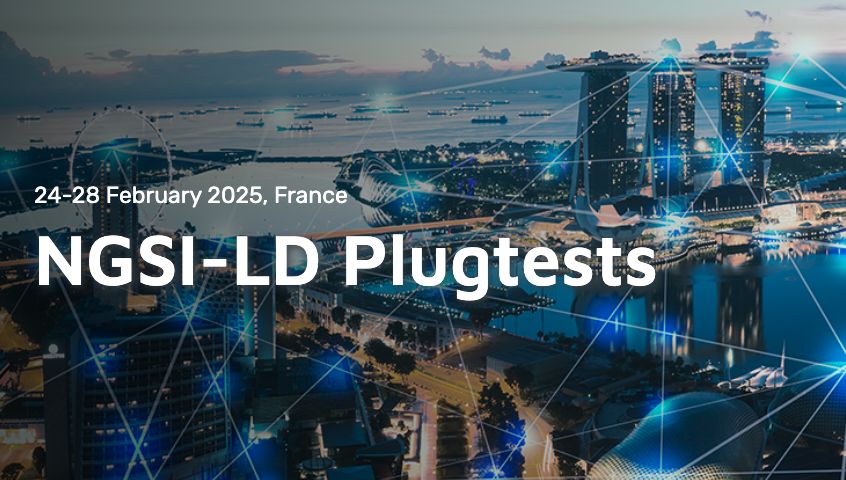
ETSI, with the support of the European Commission (EC) and the European Free Trade Association (EFTA), is organizing the NGSI-LD (Next Generation Service Interface – Linked Data) Plugtests™ event, which will be hosted by ETSI at Sophia Antipolis, France, from 24 to 28 February 2025.


What are the objectives and scope of the NGSI-LD PLUGTESTS event?
NGSI-LD (ETSI GS CIM 009) is a standard for sharing and exchanging context information in a distributed environment. The key aspects of the specification include Information Model, API, JSON-LD serialization, and security/privacy. The goal of NGSI-LD is to enable interoperability among diverse context information systems and applications, supporting use cases in smart cities, IoT, and other domains.

The first ETSI NGSI-LD Plugtests event will enable implementers of the NGSI-LD protocol and the associated API to run interoperability and conformance test sessions to assess the level of interoperability of their implementation and validate the understanding of the standards.
Interoperability events play a crucial role as a cost-efficient and effective solution to achieve the goals of ensuring seamless data exchange between applications and brokers of context information.
The testing will cover Interoperability Tests (GS CIM-054), Conformance Tests (GS CIM-029 and GS CIM-013), and Distributed Operations (GS CIM-053).

The event will enable participants to explore additional testing environments:
An interoperability framework developed by Open & Agile Smart Cities & Communities (OASC) will be proposed to validate the compliance with MIM1* NGSI-LD on the ITB (Interoperability Testing Bed) platform. This initiative is brought by Kereval and Deloitte.
IUDX has developed an NGSI-LD Compliance Test Suite that operates on a Functional Profiles basis, for functionalities such as temporal search, spatial search, attribute search, subscriptions, complex queries, and response filtering. This initiative is being supported by the INPACE Project.
This event requires in-person participation and will be hosted at the ETSI premises.


What are the advantages of attending the NGSI-LD PLUGTESTS event?
To assess the level of interoperability of your implementations
To validate your understanding of the standards
To test with (many) other real implementations and demonstrate end-to-end interoperability
To debug your implementation: early bug fixing, saving time and costs
To promote the technology and the ecosystem.


Who may participate?
NGSI-LD implementers, application developers, IoT/Smart Cities solutions developers, and others in this domain are welcome.

The NGSI-LD protocol and the associated API are designed to cater to a broad spectrum of developers seeking a simple method for enabling their applications to interact with a wide array of data sources.
Advanced Microturbines

Can you briefly introduce your company and what you do?

Advanced Microturbines Srl is an Italian deep-tech SME specialised in the development of compact microturbine technologies for energy recovery and self-powered monitoring systems. The company designs and manufactures high-efficiency microturbines from 50 W to 50 kW capable of converting pressure drops in gas and water networks into electricity, enabling autonomous power supply for IoT sensors and digital infrastructure. Its solutions support the digitalisation and sustainability of energy and industrial systems by transforming unused pressure energy into a reliable source of power for remote monitoring applications. By combining microturbine technology with smart IoT systems, we deliver innovative solutions that support smart infrastructure, improve energy efficiency, and enable decentralised energy systems.

What challenge are you addressing under the O-CEI Horizon’s first Open Call, and how is your proposal relevant to the challenge?

Our proposal addresses the challenge of enabling transparent, secure, and real-time management of energy flows in decentralised energy systems, particularly in emerging smart microgrids. As renewable generation becomes increasingly distributed, local energy communities require reliable mechanisms to measure, validate, and share energy data between multiple actors. However, current infrastructures often rely on centralised systems, not distributed ones.

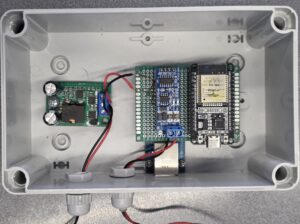
The ENTRUST solution tackles this challenge by developing an edge-validated blockchain platform for energy transactions. The system integrates IoT metering, edge computing, and blockchain notarisation to create a distributed architecture capable of securely validating energy data close to where it is generated. This approach enables real-time, low-latency processing while ensuring data integrity and transparency through blockchain mechanisms.

By combining edge processing with blockchain-based verification, the proposed platform allows microgrid participants, including households, local producers, and community operators, to securely record and validate energy exchanges. This contributes directly to the goals of the O-CEI Horizon’s Open Call by supporting decentralised, trustworthy, and scalable digital infrastructures for energy communities and smart grids.

What is the expected impact of your proposal?

The expected impact of the proposal is the development of a secure and transparent operational layer for decentralised energy systems, enabling more efficient management of renewable energy within local microgrids.

Through the integration of IoT metering, edge computing, and blockchain notarisation, the ENTRUST platform allows energy transactions and operational data to be securely recorded, validated, and shared in real time. This improves transparency and trust among microgrid participants while ensuring the integrity of energy data used for operational decisions and potential energy trading mechanisms.

The project will demonstrate the solution in the Krk Island pilot, showing how local communities can manage renewable energy generation and consumption more effectively. By enabling tamper-proof data validation and automated smart-contract processes, the platform supports fair and auditable energy exchanges between producers, consumers, and community operators.

Beyond the pilot, the modular and scalable architecture of ENTRUST allows the platform to be replicated in other energy communities and distributed energy systems across Europe. In this way, the project contributes to the broader objectives of the European energy transition, supporting the integration of renewable energy, strengthening local energy resilience, and enabling new models of transparent and decentralised energy management aligned with EU climate and energy policies.

Company website: www.microturbines.it