

- Describe your company in one paragraph.
PinakashieldTech is an AI-driven cybersecurity startup whose mission is to safeguard the IT-OT convergence era through privacy-first, quantum-secure protection. Their vision centers on creating a resilient global digital ecosystem where enterprises can autonomously counter emerging threats like AI-driven attacks, ransomware without ever compromising data sovereignty. PinakashieldTech delivers a unique security framework that converges federated learning, generative AI, zero-trust architecture, and post-quantum cryptography. This allows organizations in high-stakes sectors, such as critical infrastructure and healthcare, to pool threat intelligence and proactively detect zero-day vulnerabilities without exposing sensitive raw data. Ultimately, PinakashieldTech provides the tools for businesses to achieve next-generation cybersecurity and seamless regulatory compliance while maintaining absolute user trust.
- What challenge are you addressing under the O-CEI Horizon’s first Open Call, and how is your proposal relevant to the challenge?
The challenge we address under O-CEI Horizon’s first Open Call is the cybersecurity of Pilot 7’s distributed EV charging infrastructure, specifically the need for effective external penetration testing and a more advanced, scalable protection model for 5G-enabled charging systems. As EV charging points become connected assets within the wider energy and mobility ecosystem, they also become attractive targets for cyberattacks such as ransomware, service disruption, protocol manipulation, and data interception. Traditional security approaches are often centralized, reactive, and cloud-dependent, which makes them poorly suited to low-latency, privacy-sensitive, and operationally critical environments like Pilot 7.
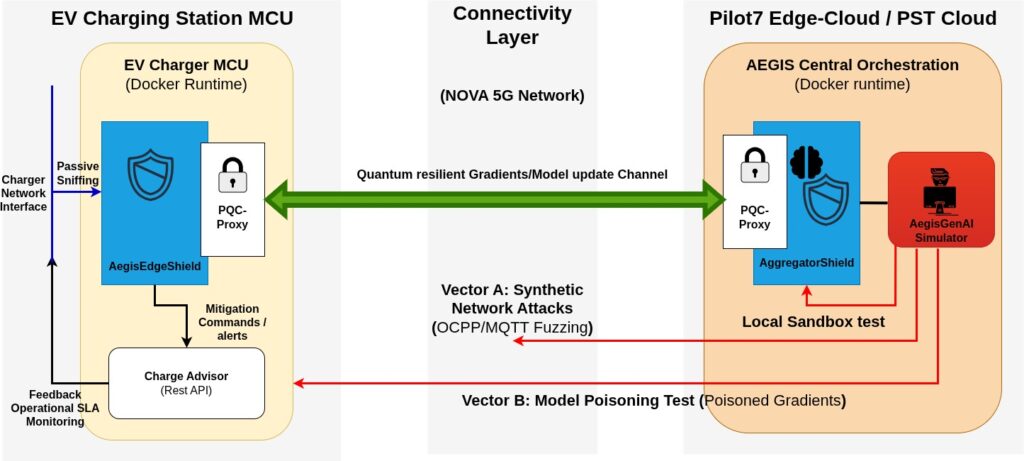
Fig 1. High-Level Functional diagram of AEGIS
Our proposal, AEGIS (presented in Fig1.), is highly relevant because it introduces a proactive, edge-native cybersecurity layer designed specifically for this type of Cloud-Edge-IoT infrastructure.
Instead of relying on raw data being transferred to central systems for analysis, AEGIS enables threats to be detected locally at the charging point through a Federated Transfer Learning Intrusion Detection System. This allows real-time detection of abnormal behaviour while preserving data sovereignty and reducing dependence on cloud processing.
The proposal also strengthens the external penetration testing challenge by introducing a Generative AI Threat Simulator that continuously creates realistic and previously unseen attack scenarios. This makes security testing more dynamic and forward-looking than periodic manual assessments, helping Pilot 7 identify weaknesses earlier and improve resilience against emerging threats. In parallel, AEGIS integrates post-quantum cryptography to protect communications against future decryption risks, ensuring that the solution is not only relevant for today’s threat landscape but also future-proof.
In this way, AEGIS directly responds to the selected challenge by transforming cybersecurity from a reactive compliance function into an autonomous, privacy-preserving, and scalable trust layer for EV charging infrastructure. Its validation in Pilot 7 will provide both immediate value to the pilot and a replicable security blueprint for similar distributed infrastructures across Europe.
- What is the expected impact of your proposal?
AEGIS is expected to generate significant impact at technological, economic, environmental, and societal levels by strengthening the security, resilience, and trustworthiness of Europe’s emerging EV charging infrastructure. At the technological level, the project will upgrade PinakashieldTech’s existing cybersecurity capabilities into a validated, edge-native solution for Pilot 7, moving from an early-stage component towards an operational TRL 7 deployment. By combining federated transfer learning, generative AI-based threat simulation, and post-quantum cryptography, AEGIS will demonstrate a novel security framework capable of detecting and mitigating cyber threats in real time while preserving data sovereignty and respecting stringent privacy requirements. This directly contributes to a more secure and trustworthy Cloud-Edge-IoT architecture for critical mobility infrastructure.
From a market perspective, AEGIS will support the transition of PinakashieldTech from bespoke cybersecurity services towards a scalable, licensable “Trust-as-a-Service” offering tailored to Charging Point Operators, smart grid actors, and other operators of distributed critical infrastructure. The project will therefore not only validate the technical feasibility of the solution, but also de-risk its future commercial uptake across Europe. Its modular and standards-compatible design creates strong replication potential beyond Pilot 7, including applications in smart grids, industrial IoT, and other connected edge environments.
AEGIS is also expected to deliver clear environmental and social benefits. By processing security intelligence locally rather than relying on constant cloud transfer, the solution reduces data transmission overhead and contributes to a more energy-efficient digital infrastructure. At the same time, by protecting EV charging systems against disruption, data compromise, and grid-related cyber risks, the project helps reinforce public confidence in electric mobility. In this sense, AEGIS supports Europe’s wider objectives on sustainable transport, digital sovereignty, privacy-preserving innovation, and resilient critical infrastructure.