
- Describe your company in one paragraph.
mSemicon develops, manufactures and supplies innovative products that feature advanced electronics. The company is also very active in funded research, especially in the energy sector, as well as in sensor technology, IoT solutions, and medical applications. As many of mSemicon’s products are part of networked applications, and indeed are the communications hubs, the company is increasingly introducing embedded edge technology as integral parts of solutions. Machine learning has also long been a feature of mSemicon’s product suite, and is now being augmented even more using the latest advances in AI. By applying cross-industry insights, from energy to RF and machine learning, mSemicon delivers innovative, custom products from concept to timely production.
- What challenge are you addressing under the O-CEI Horizon’s first Open Call, and how is your proposal relevant to the challenge?
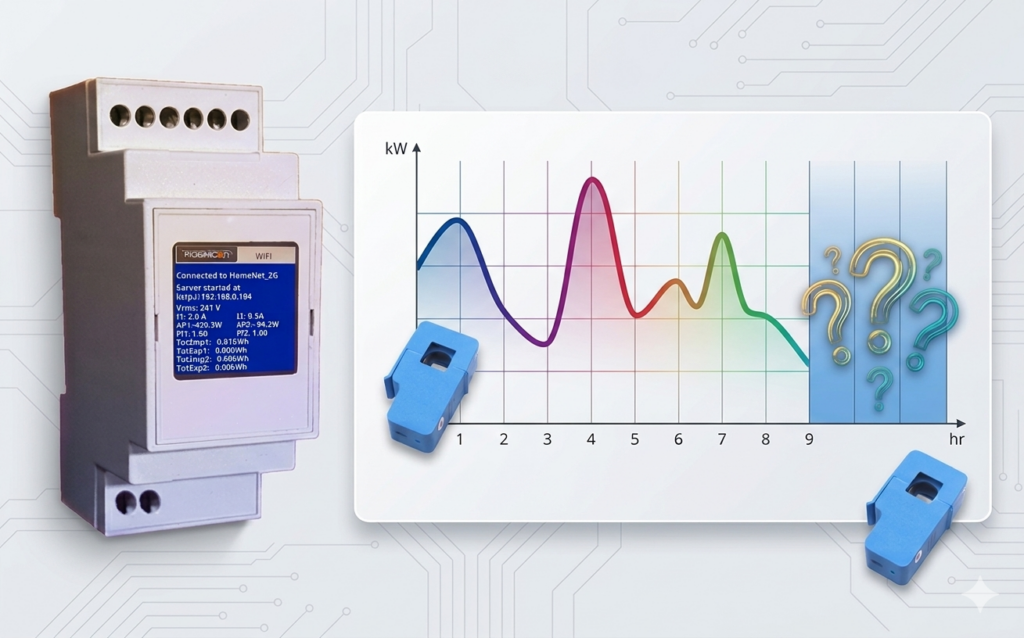
Electricity networks need to balance load and supply in real-time. If this balance can be achieved in small communities, using local generation provided by renewable energy systems like wind and solar, the prospect of minimising fossil energy use and even reaching energy self-sufficiency will be closer. In order to implement such a solution, though, it is necessary to match generation with consumption, but this is notoriously difficult to do in real-time. Batteries help, but the problem remains. If, however, the anticipated demand of consumers was known with reasonable accuracy in the near-term, the challenge would be considerably easier to overcome, since short-term supply contracts could be implemented. This demand prediction is what ALF is trying to achieve, at the building level, such as in the case of typical homes.
ALF, or “Adjusted Load Forecasting”, builds upon mSemicon’s AD551X flexible electricity meter, enhancing its performance with added embedded Edge AI functionality geared towards the generation of reliable short-term (2-hour to 24-hour) predictions of electricity demand in the building in which the meter is installed. Current and historical consumption data will be used in order to generate these predictions, as well as information from internal and external environmental sensors in the buildings concerned. The result will be a prediction of anticipated load in whatever time frame is required, all estimated internally to the building itself, without the need to send any data to the cloud, thereby protecting occupant privacy.
The final stages of ALF will involve the deployment of the solution in a test site. As time progresses, the AI models will be improved in order to tune their performance. It is expected that the result will be an important contribution to the drive to increase renewable energy participation in national grids.
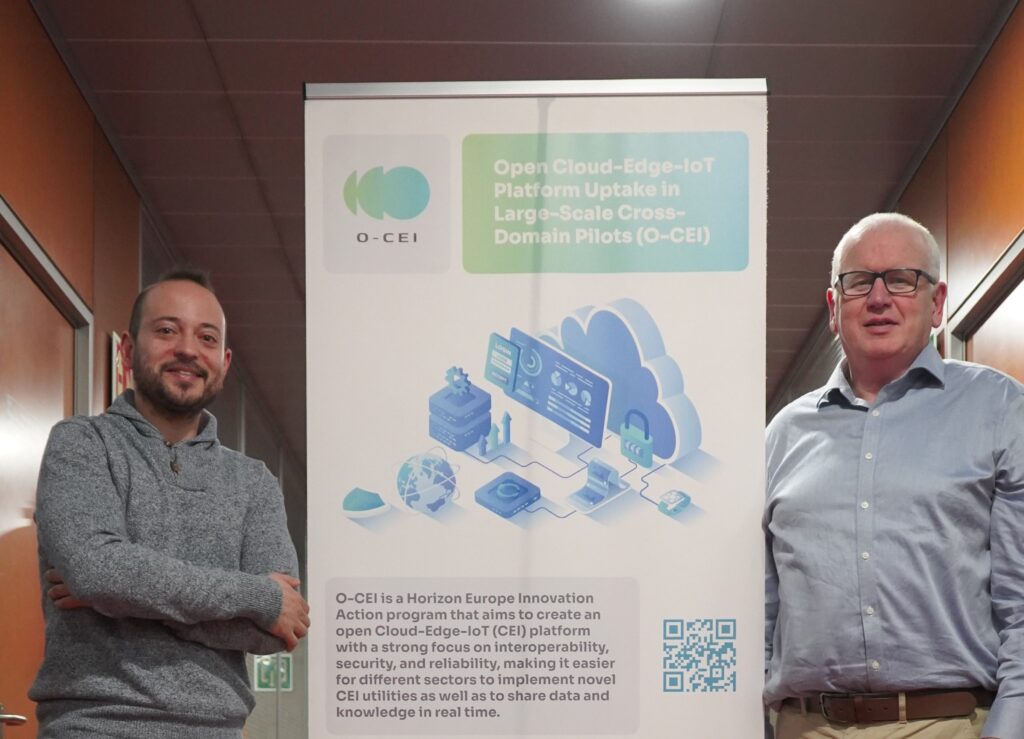
ALF is being led by Brian O’Regan of the UCC IERC Energy Informatics Centre in Cork, Ireland, and is part of the EU-funded O-CEI project.
- What is the expected impact of your proposal?
ALF will project creating a smarter, more private, and more democratic energy system, right at the edge of one’s home or business. Instead of sending your energy data to the cloud, our technology will process it locally, on-device, to deliver highly accurate short-term forecasts that help optimise energy use in real time.
At the heart of our work is a ready-to-integrate hardware and software module, combined with lightweight AI models that learn and adapt on the fly. This approach shifts intelligence from centralised servers to the devices themselves, making energy systems more efficient, responsive, and secure.
- So what does this mean in practice?
For the energy grid, it brings better visibility into local networks, helping grid operators manage congestion, integrate more renewable energy, and reduce the need for costly infrastructure upgrades. For businesses like utilities and hardware manufacturers, it offers a new, open standard that lowers barriers to innovation and creates fresh market opportunities. And for people, it means greater control over energy use, the ability to participate in local flexibility markets, and the peace of mind that comes with privacy-by-design—no sensitive data leaving the home.
Longer term, ALF supports Europe’s Green Deal and decarbonisation goals by enabling more efficient energy use and higher uptake of renewables. It strengthens Europe’s industrial competitiveness in Edge AI and smart grid technologies, while contributing to a more equitable energy transition—one where vulnerable households can also benefit from cost savings and greater energy security.
With a clear strategy for licensing, partnerships, and pan-European scaling, ALF is designed to grow from pilot projects into a widely adopted standard. Our vision is to see millions of European buildings equipped with this embeddable intelligence, working together as part of a resilient, decentralised, and democratic energy future.
Website: www.msemicon.com