

1- Describe your company in one paragraph.
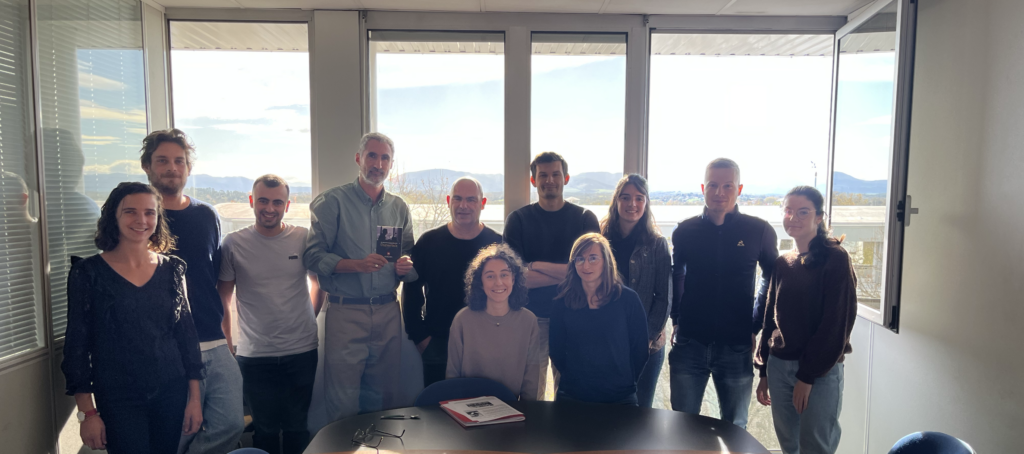
Founded in 2014 and operating from Bidart (France) and San Sebastián (Spain), HUPI is a technology company specializing in artificial intelligence and edge-computing solutions for complex industrial environments. Since 2024, HUPI has been fully employee-owned under a cooperative governance model that promotes long-term commitment, innovation, and sustainable value creation.
Our team develops AI-powered decision-support systems that transform advanced research into reliable, market-ready products integrated into clients’ operational systems. HUPI solutions provide predictive analytics, automation, and real-time recommendations through a proprietary Big Data and AI platform.
The company serves more than 100 major industrial clients across energy, transport, water, and manufacturing sectors, including SAFRAN Helicopter Engines, ENEDIS, TEREGA, ACTIA, Mondragon Corporation, Gestamp, and Keolis.
2- What challenge are you addressing under the O-CEI Horizon’s first Open Call, and how is your proposal relevant to the challenge?
Ports undergoing electrification face a complex energy-management challenge: rapidly increasing electricity demand, highly variable operational consumption, aging infrastructure, and strict operational performance requirements. Equipment such as ship-to-shore cranes, electric yard machines, shore power systems, and refrigerated containers create large and unpredictable energy peaks. In island energy systems such as Malta’s, where grid reserve capacity is limited, these fluctuations can threaten grid stability and increase operational costs.
Malta Freeport Terminals illustrates this challenge. The terminal is electrifying equipment and deploying electric vehicles while simultaneously expanding shore-power usage. At the same time, the national grid operator must manage rising residential and tourism-driven electricity demand. Unpredictable factors—vessel arrival variability, reefer container volumes, weather conditions, or operational incidents—make it extremely difficult to anticipate energy peaks and optimize electricity usage.
HUPI addresses this challenge by developing an AI-powered Energy Dynamic Simulation tool capable of modelling and predicting the energy impact of port operations under uncertainty. The system integrates multi-source operational data from port systems, equipment telemetry, grid monitoring, and environmental conditions. Using probabilistic modelling rather than deterministic forecasting, it identifies the operational events that most influence energy consumption and allows users to simulate “what-if” scenarios.
Port operators and grid managers will be able to test how operational decisions—such as crane scheduling, vessel shore-power usage, reefer management, or EV charging—affect total energy demand, peak loads, and grid stability. The tool will also place these simulations in the context of projected island-wide energy consumption over the next decade.
By linking operational decision-making with energy system constraints, HUPI’s solution enables ports to optimize performance while supporting grid stability and decarbonization objectives.
3- What is the expected impact of your proposal?
Hupy Dynamic Energy Simulation Tool will enable ports to manage electrification while maintaining operational performance and reducing environmental impact. By combining AI-based probabilistic forecasting with dynamic scenario simulation, the system will allow operators to anticipate energy demand, identify the operational factors that generate peak loads, and test optimization strategies before implementing them.
The primary impact will be improved energy efficiency and peak-load smoothing. By coordinating activities such as crane operations, vessel shore-power connections, refrigerated container management, and electric vehicle charging, ports will be able to reduce energy spikes, lower electricity costs, and improve the stability of the surrounding power grid. This is particularly critical in island systems like Malta, where grid capacity is limited and peak demand often requires the activation of high-emission backup generation.
The solution also supports the large-scale electrification of port equipment and vessels by providing a reliable decision-support system for integrating new electrical loads. This directly contributes to European decarbonization policies, including the Green Deal, the “Fit for 55” package, and the deployment of on-shore power supply under the Alternative Fuels Infrastructure Regulation.
Beyond environmental benefits, the system will improve operational planning and reduce stress on port operations teams by shifting energy management from reactive responses to predictive decision-making. Operators will gain clearer visibility on future energy demand and the consequences of operational decisions, enabling safer and more efficient planning.
Ultimately, the project demonstrates how AI-driven simulation can transform ports into intelligent energy actors, supporting both operational competitiveness and the transition toward low-carbon maritime logistics.