
The automotive industry is undergoing a profound dual transformation, shifting value from hardware to digital intelligence. Throughout 2025, O-CEI Pilot 2 has been at the centre of this shift in Timișoara, Romania, reimagining cars not just as transport but as active nodes in a vast Cloud-Edge-IoT continuum. Operating under the theme of “Software Defined Vehicle for VaS in Urban Areas,” the pilot is transforming cars into a “Vehicle as a Service” (VaS) platform.
Four Pillars of Innovation: Driving Safety and Sustainability
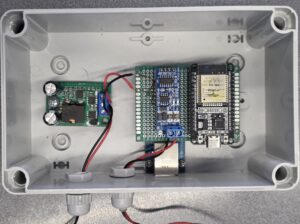
During its initial year, the team focused on embedding vehicles into this computing continuum to enable real-time analytics and decentralized decision-making. Led by Aumovio (formerly Continental’s Automotive software division) alongside partners ERTICO and FENIX 2.0, the pilot successfully deployed edge modules and AI accelerators across a prototype fleet. These vehicles now function as intelligent edge nodes, capable of sensing and computing with low latency while coordinating seamlessly with mobility and energy infrastructures.
The work in Timișoara is built on four high-impact scenarios that demonstrate the versatility of the O-CEI platform. In the realm of Vehicle Safety, the pilot is running time-critical AI at the edge, using multi-sensor fusion from LiDAR, radar, and cameras for real-time object detection. For Sustainability and Carbon Tracking, as an outcome of the SDV for the sustainability use case, the team has already collected verifiable footprint data over more than 9,500 km across Timișoara and Bucharest from dozens of vehicles, and the integration of additional vehicles is ongoing. (Pictures 0 to 6)
The pilot also explores Fleet V2G Integration, transforming vehicles into “mobile energy storage” units that can contribute power back to the grid during peak demand. Finally, Grid Optimization allows vehicles to participate in smart grid balancing through prediction algorithms and real-time data exchange, supporting grid stability and optimizing the energy mix.
A defining achievement of the first implementation phase has been aligning with European data spaces like Catena-X and Gaia-X/IDSA. By adopting these standardized models, Pilot 2 ensures its solutions are interoperable blueprints capable of being replicated across other European cities. The pilot has already met critical technical performance metrics, keeping on-vehicle inference latency under 100ms and ensuring data transmission reliability stays above 99%. These benchmarks are vital for safety-critical functions where every millisecond is decisive.
Strategic Outreach
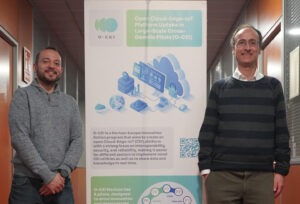
Pilot 2’s vision has also been shared extensively with the global research and industrial community. Representatives participated in the Fifth Visions for Future Communications Summit 2025 in Lisbon, where Dr. Eusebiu Catana (Coordinator for Pilot 2) presented a holistic view on “Mobility – Challenges for 2030 and Beyond,” helping to define long-term priorities for the upcoming FP10 framework program.
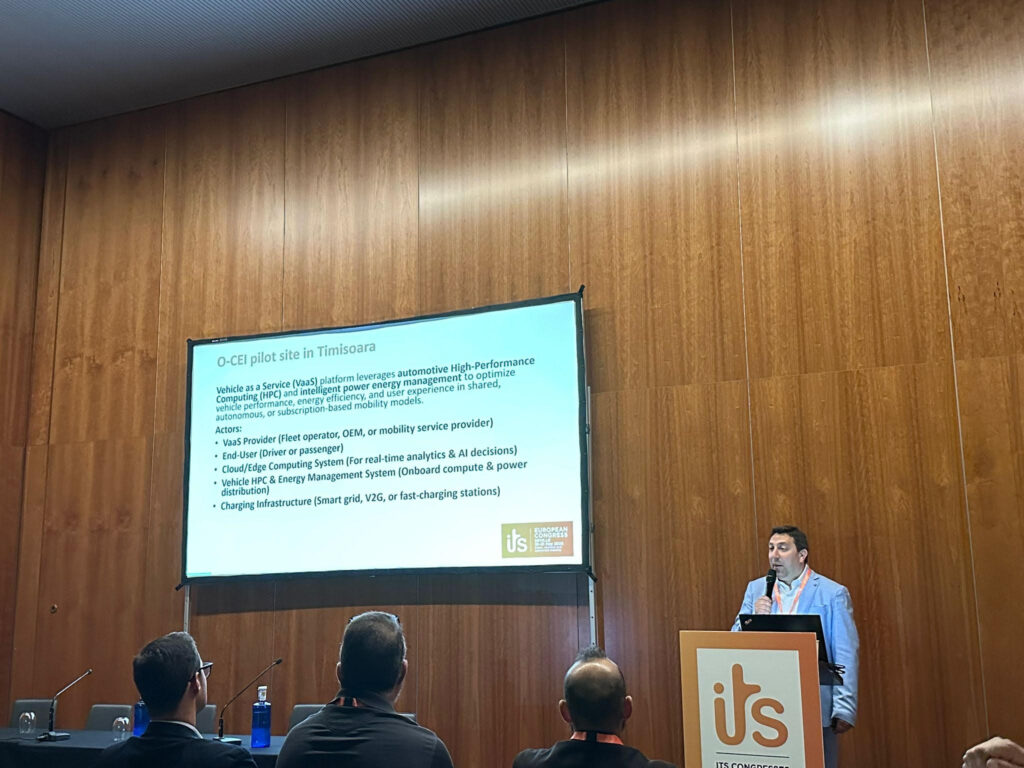
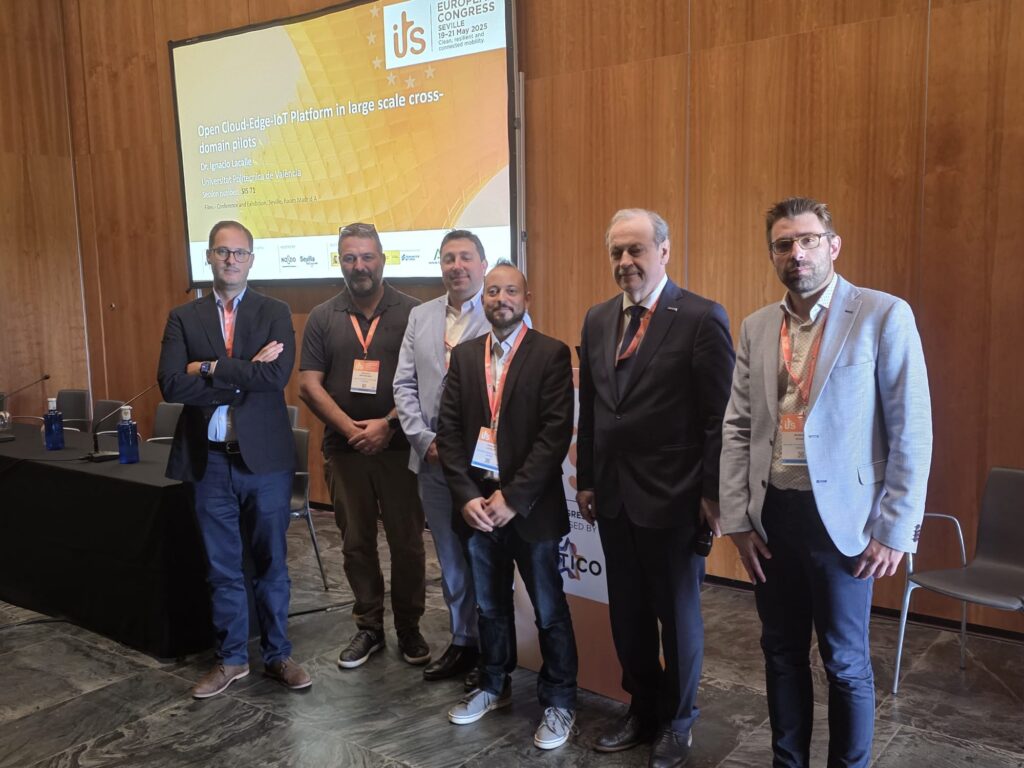
The team also showcased their digital shift at the ITS European Congress 2025 in Seville. The O-CEI Pilot 2 is advancing the VaS platform by integrating high-performance computing and intelligent energy management. The goal is to improve both the performance and energy efficiency of vehicles, especially in shared, autonomous, or subscription-based mobility models. With this background, a practical case study was presented, starting from the conditions of the host city. In Sevilla, high temperatures lead to increased air conditioning use, causing faster battery drain. In this case, the car system must not only find the nearest charging station but also factor in real-time traffic data to estimate how long it will take to get there, ensuring the journey remains smooth and efficient.
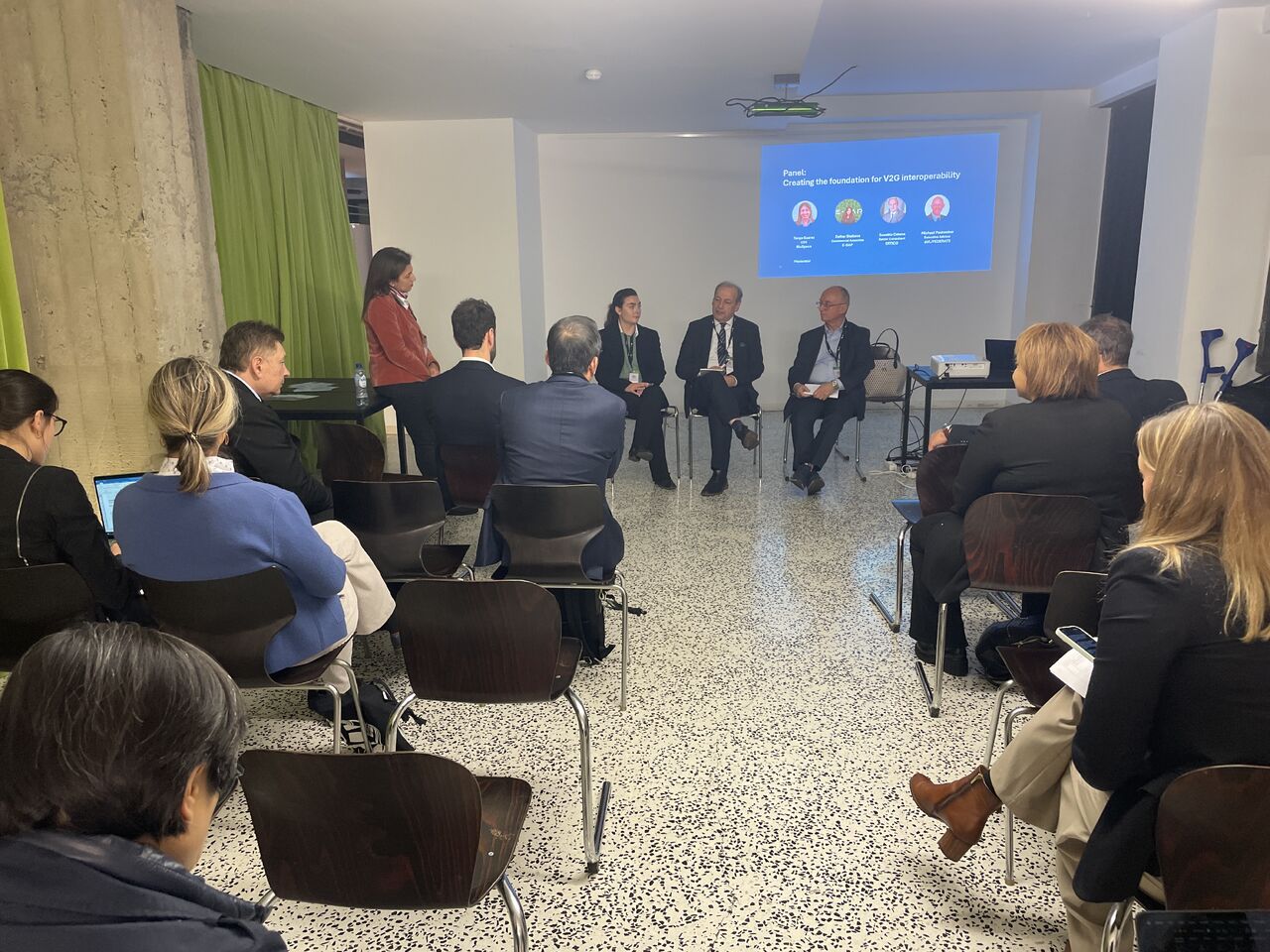
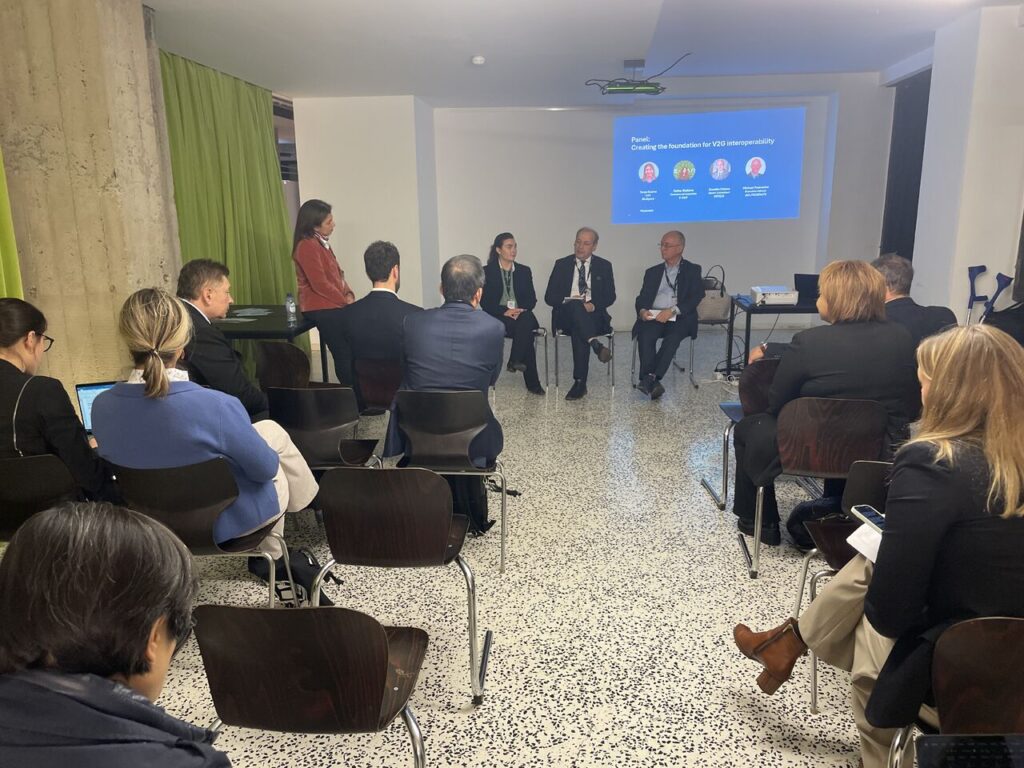
In Brussels, the V2G Leaders Europe Summit, Pilot 2 was highlighted during a specialized workshop co-organized by CEI-Sphere and O-CEI, exploring how SDV architecture, connectivity standards, and energy ecosystems are redefining infrastructure and business models.
As the pilot moves toward 2026, the focus will shift to full-scale deployment. By putting the Software-Defined Vehicle at the heart of the urban ecosystem, Pilot 2 is not just modernizing transportation; it is catalysing a sustainable transformation that aligns local mobility with broader European Green Deal goals.