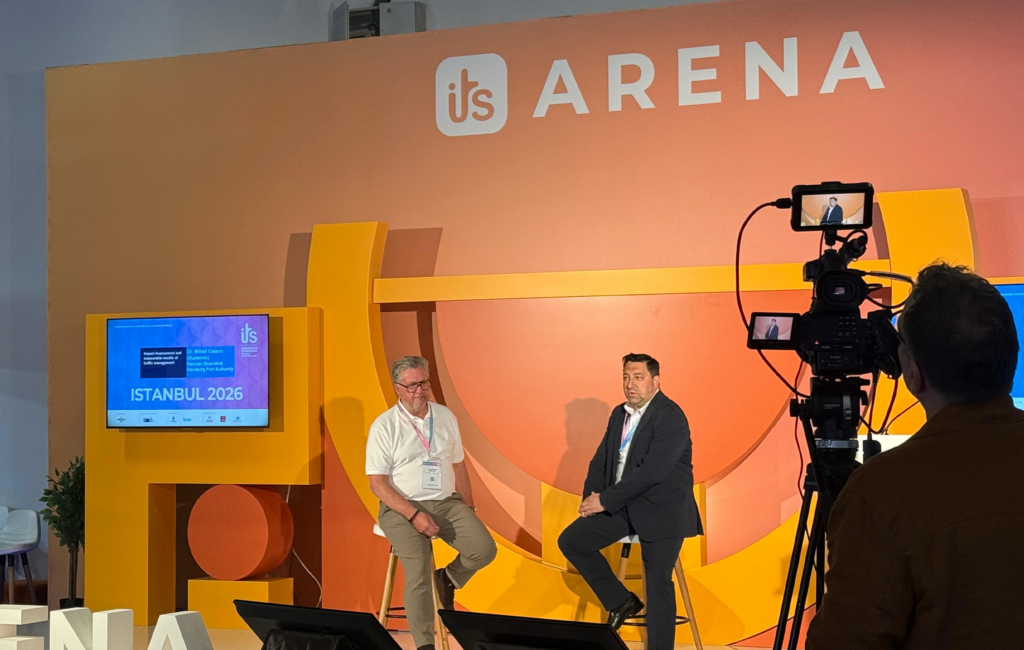

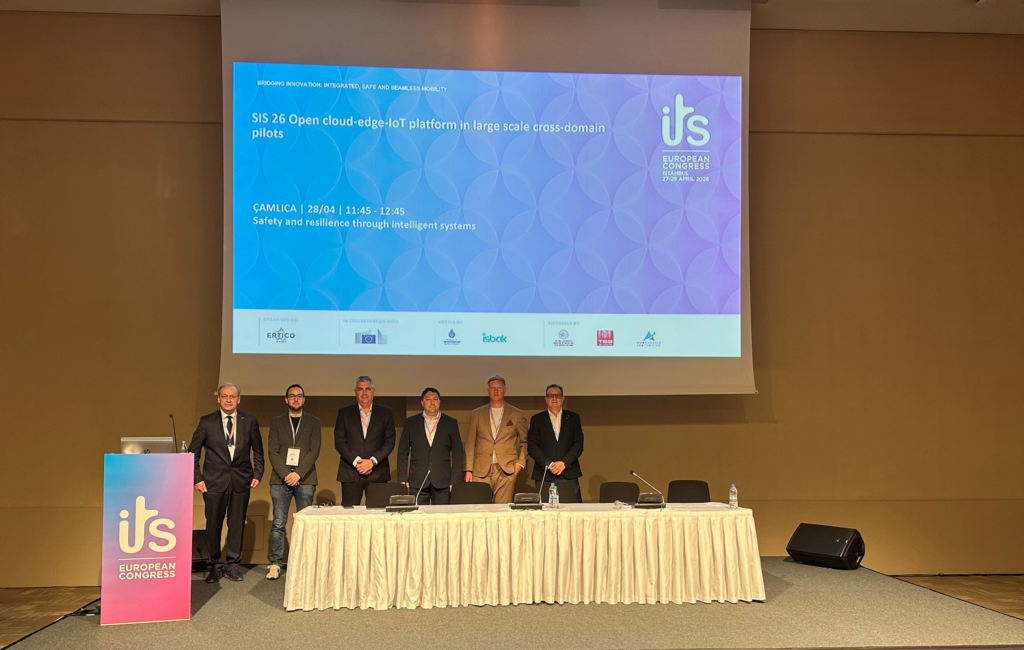
From 27 to 29 April, the 17th ITS European Congress in Istanbul brought together key stakeholders from across Europe’s mobility, energy, and digital sectors. The O-CEI Horizon Europe project actively contributed to the programme through a dedicated special session titled “European Open IoT Edge/Cloud Continuum as Enabler for Energy Flexibility.”
The session was organised by Dr. Eusebiu Catana, Senior Consultant at ERTICO – ITS Europe and leader of O-CEI Pilot 2, and moderated by Dr. Alejandro Fornés Leal, from UPV, the institution coordinating the O-CEI project. Dr. Fornés Leal moderated the session, providing industry context throughout it, ensuring a coherent flow across technical, industrial, and policy perspectives.
Setting the Scene: O-CEI’s Vision and Architecture
The session opened with an introduction to O-CEI’s core ambition: to establish a European reference point for Cloud–Edge–IoT solutions. The project’s blueprint-based methodology, marketplace concept, and platform approach were presented as key enablers for accelerating industrial adoption. Emphasis was placed on leveraging open-source technologies, DevSecOps practices, and standardised interfaces to ensure interoperability and scalability across sectors.
The audience was also introduced to the project’s pilot ecosystem, including strong representation from the automotive domain, with Pilots 2 and 3 taking centre stage during the session.
Pilot 2: Software-Defined Mobility in Urban Environments
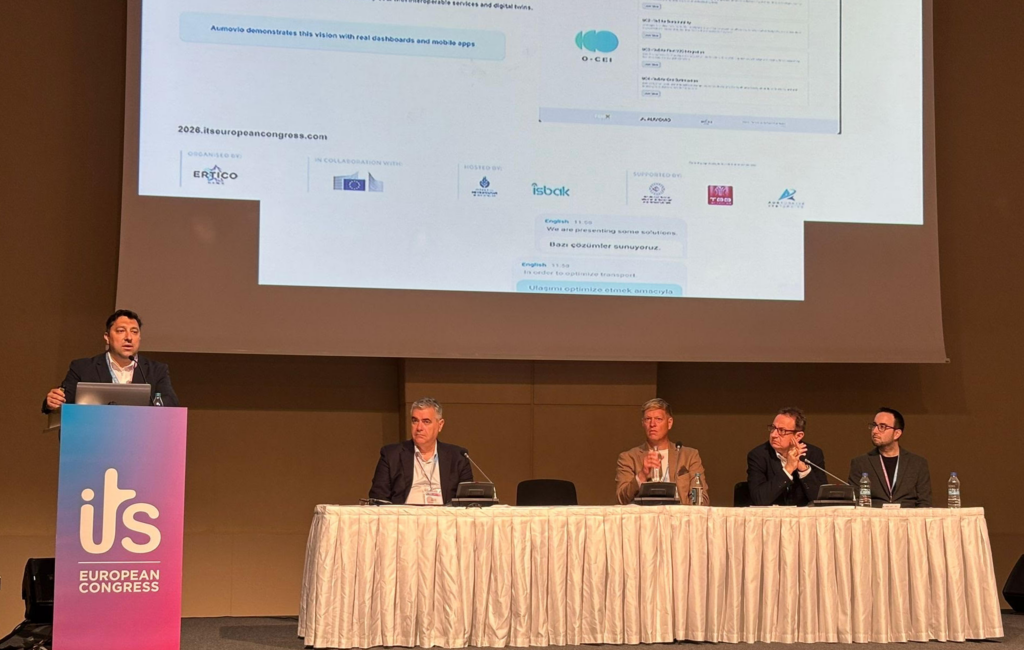
Dr. Mihail Gaianu, from AUMOVIO, presented the results of Pilot 2, focusing on software-defined mobility services for urban environments. The presentation demonstrated how vehicles can evolve into active, interoperable nodes within a wider Cloud–Edge–IoT continuum, supporting safer, smarter, and more sustainable cities.
By integrating IoT, edge, and cloud technologies, the pilot showcased how mobility systems can become more connected and adaptive. This approach enables improved coordination across urban transport networks and supports the development of flexible, data-driven mobility services aligned with real-time conditions and user needs.
Pilot 3: Optimising Electric Fleet Operations
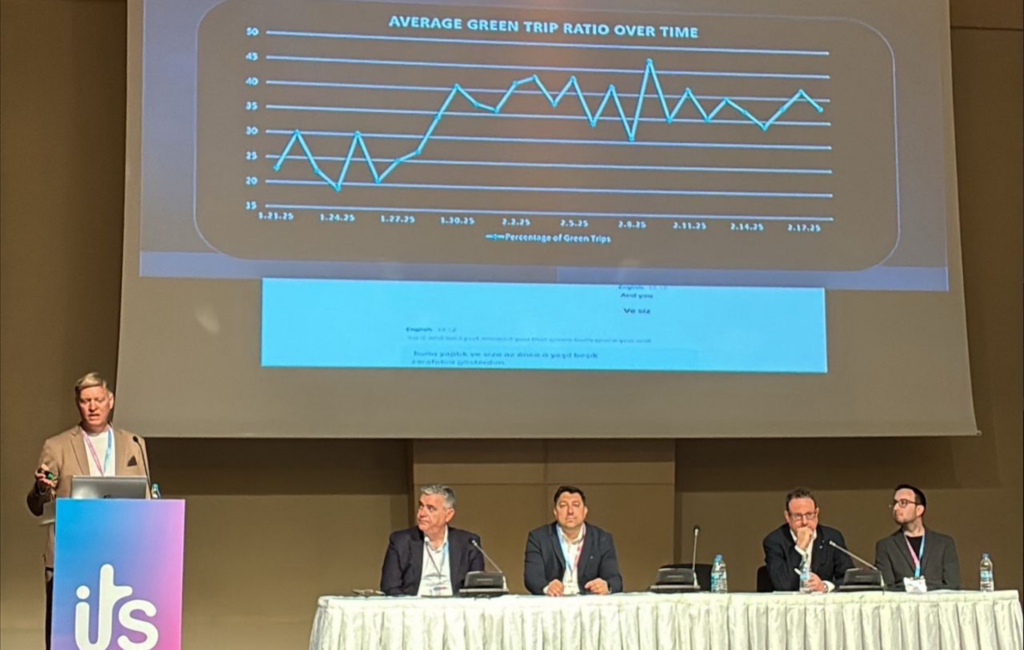
From the energy perspective, Dr. Bernhard Peischl, from AVL, presented Pilot 3, focusing on cross-domain data for cost- and peak-optimised depot charging of large electric vehicle fleets.
The pilot demonstrated how operational complexity in fleet depots can be translated into measurable outcomes, reducing charging costs, lowering peak loads, and contributing to CO₂ reduction targets. A key concept presented was the “depot → cloud → depot” loop, enabling continuous optimisation by transforming fleet and energy data into actionable charging schedules.
Importantly, the presentation addressed real-world constraints such as vendor-controlled systems, limited data access, and interoperability challenges. Within this context, cross-sectoral optimisation, bridging automotive and energy domains, was highlighted as the main driver for scalable and repeatable deployment.
Expanding the Perspective: Scalability Across Levels
The session was further enriched by contributions from Dr. Jörg Hetterich, from BMW Group, and Prof. Joaquim Ferreira, from Instituto de Telecomunicações, University of Aveioro, Portugal.
Their presentations extended the discussion on scalability and interoperability. At the automotive manufacturer level, the focus was on how software-defined vehicles can scale across fleets and services. At the broader system level, the use of C-ITS data illustrated how national-scale traffic management systems can benefit from integrated, interoperable infrastructures.
Key Takeaways: From Design Principles to Deployment Reality
A central conclusion of the session was clear: scalability and interoperability are not abstract design goals, they are practical requirements for real-world deployment.
O-CEI demonstrated its ability to operate across multiple levels, from individual vehicles and devices to fleet operations and large-scale energy systems. Pilot 2 highlighted how mobility services can scale dynamically in urban environments, while Pilot 3 showed how large fleets can be optimised without compromising efficiency or grid stability.
Equally important was interoperability. The session showcased how diverse components (vehicles, charging infrastructure, energy systems, cloud platforms, and external data sources) can function together within a unified IoT–Edge–Cloud continuum. Open standards and interfaces were identified as critical enablers for coordination across stakeholders, platforms, and markets.
Looking Ahead
O-CEI Horizon’s participation in the ITS European Congress reaffirmed its role in advancing Europe’s digital and energy transition. By demonstrating concrete pilot results and addressing real-world deployment challenges, the project highlighted a viable path towards integrated, scalable, and sovereign Cloud–Edge–IoT ecosystems.
As mobility and energy systems become increasingly interconnected, approaches like O-CEI’s will be essential to manage complexity, and to unlock new efficiencies, services, and sustainability gains across Europe.