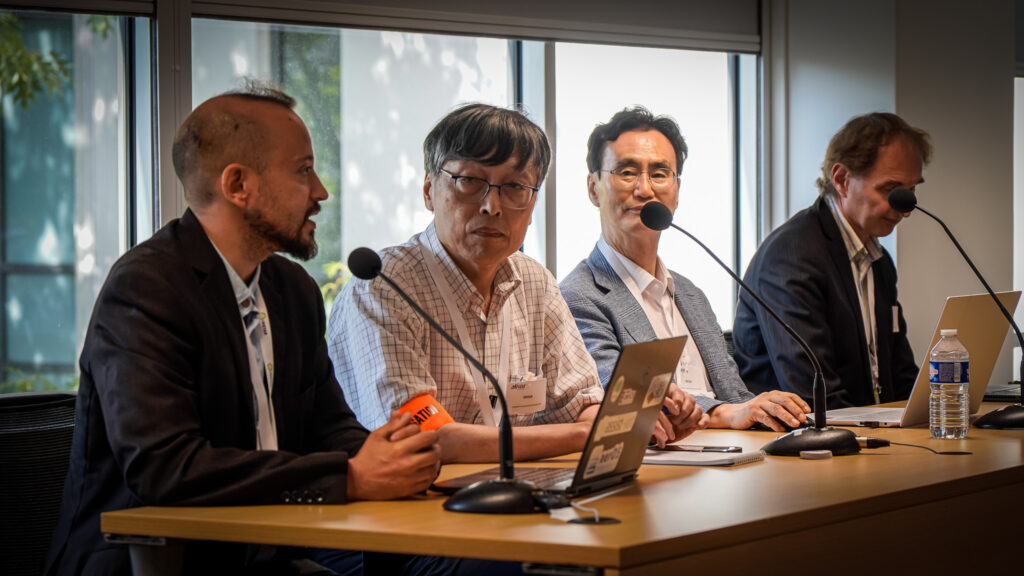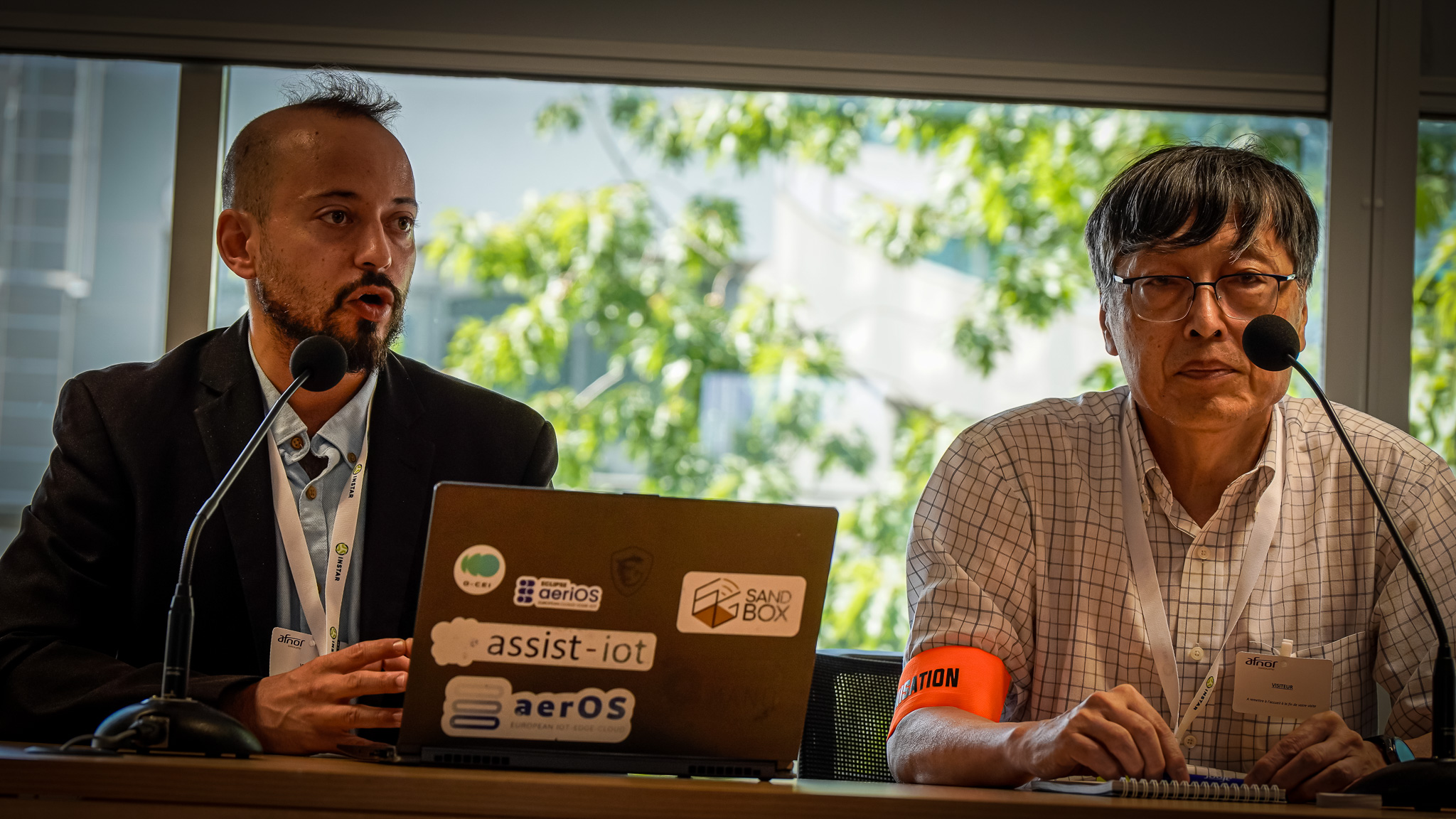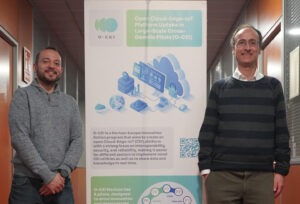



O-CEI Horizon participated in the Regional Workshop on Standards for Cloud–Edge–IoT Ecosystems, held on 23 June 2026 in Paris alongside the ISO/IEC JTC 1/SC 41 Plenary Meeting. Organised by the CEI-Sphere initiative, the workshop brought together representatives from European research projects, international standardization bodies, industry, and the European Commission to discuss how standards and open-source technologies can support the development of interoperable and sovereign Cloud–Edge–IoT ecosystems.
The workshop opened with keynote presentations from Yongjin Kim, Chair of ISO/IEC JTC 1/SC 41, who presented the international standardization strategy for the Internet of Things, Digital Twins, and Physical AI, and Svet Mihaylov from the European Commission, who highlighted the importance of coordinated European efforts to strengthen digital sovereignty through interoperable technologies and standards.
Throughout the afternoon, speakers explored the growing impact of digital twins, Cloud–Edge–IoT technologies, data spaces, and AI on future standardization activities. Discussions emphasized that interoperability should be embedded from the earliest stages of system design, while open-source communities, industrial stakeholders, and standards development organisations must work together to accelerate the deployment of trusted digital infrastructures.
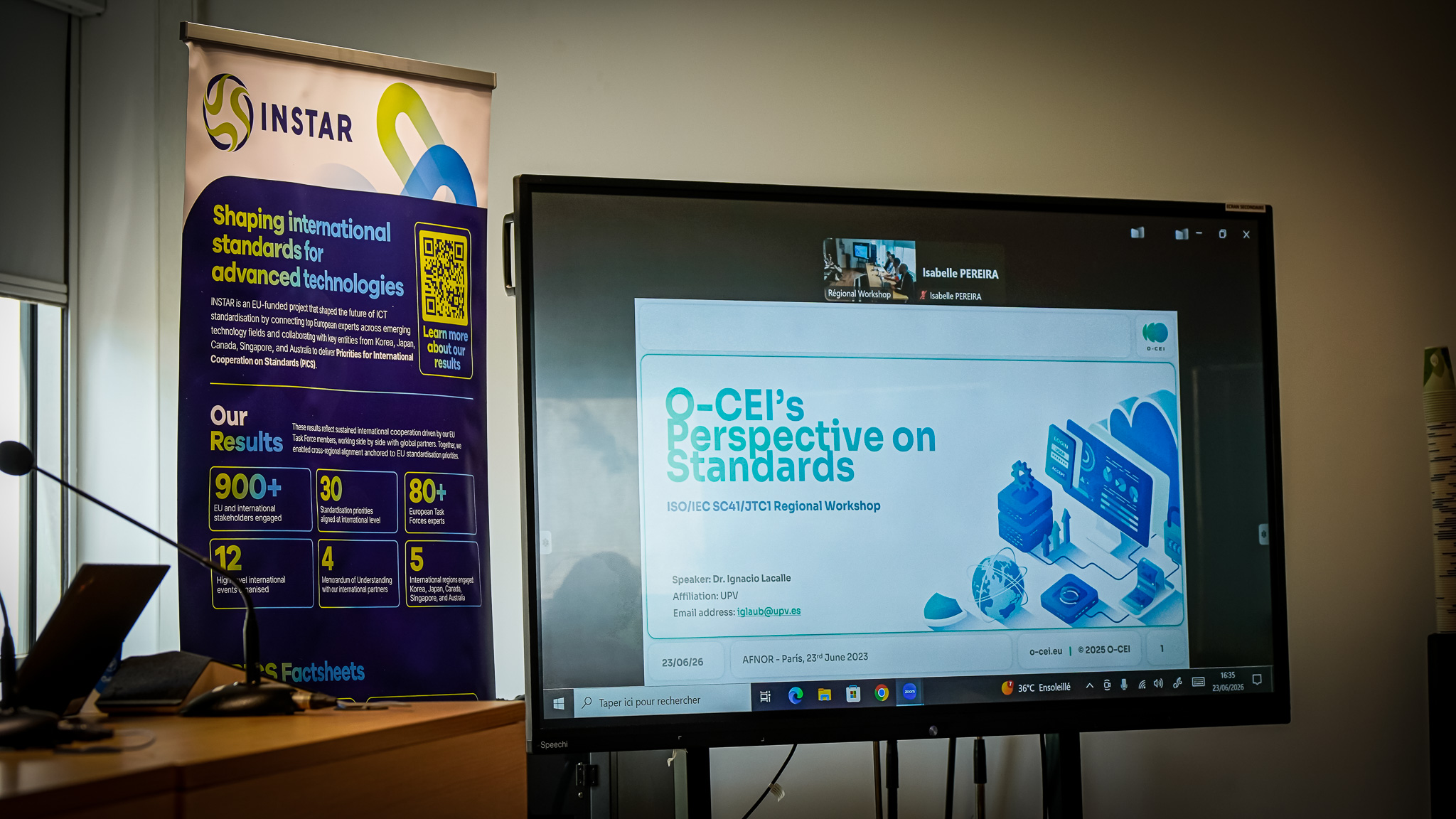
Representing O-CEI, Ignacio Lacalle from the Universitat Politècnica de València presented the project’s vision of transforming Cloud–Edge–IoT blueprints into deployable digital assets. The presentation showcased how the O-CEI Platform, Marketplace, and reusable blueprints provide a practical framework for designing, deploying, and sharing interoperable services across heterogeneous Cloud–Edge–IoT environments. By enabling reusable digital assets that can be adopted across multiple application domains, O-CEI contributes to reducing fragmentation and facilitating the wider uptake of Cloud–Edge–IoT technologies.
The workshop also featured presentations on the Hourglass Model developed within CEI-Sphere, demonstrating how ecosystem analysis can help align technologies, standards, stakeholders, and open-source building blocks, as well as sessions dedicated to data spaces, self-sovereign identity, trusted AI, and European cooperation roadmaps.
Beyond the workshop itself, the event formed part of a broader week of international standardization activities surrounding the ISO/IEC JTC 1/SC 41 Plenary. The discussions highlighted the increasingly important role of European research projects in supporting international standardization efforts and fostering collaboration between research, industry, open-source communities, and policymakers. Particular attention was given to the growing convergence between open-source implementations and formal standards, as well as to emerging initiatives that will shape Europe’s future digital infrastructure.
O-CEI’s participation reflects the project’s continued commitment to contributing not only technological innovations but also practical experience to the European standardization landscape. By combining open-source development, reusable architectures, interoperability-by-design, and collaboration with initiatives such as CEI-Sphere, COP-PILOT, LICORICE, and the Eclipse Foundation, O-CEI is helping build the foundations for a more open, interoperable, and sovereign Cloud–Edge–IoT ecosystem across Europe.