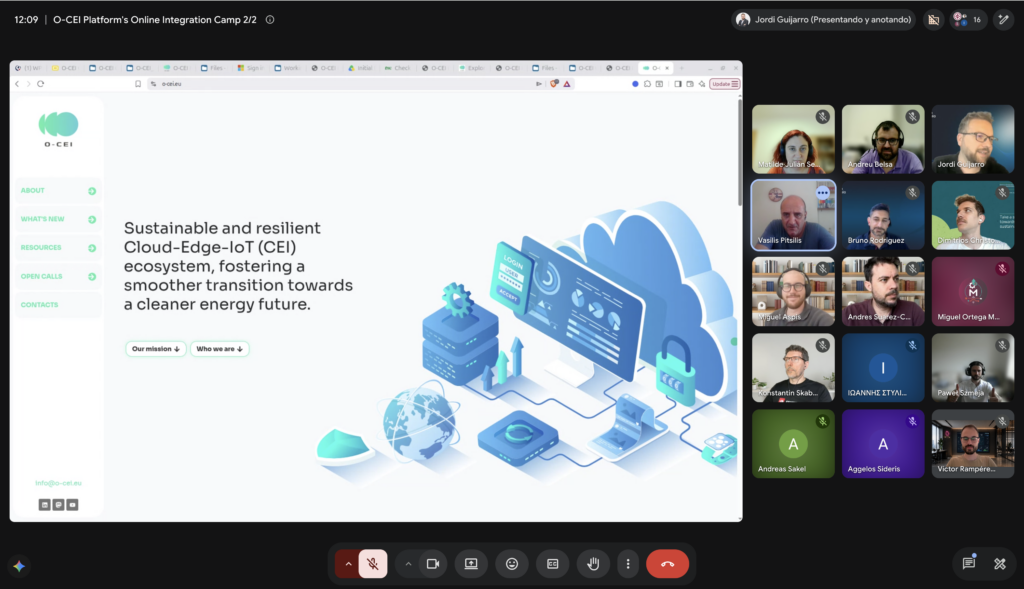
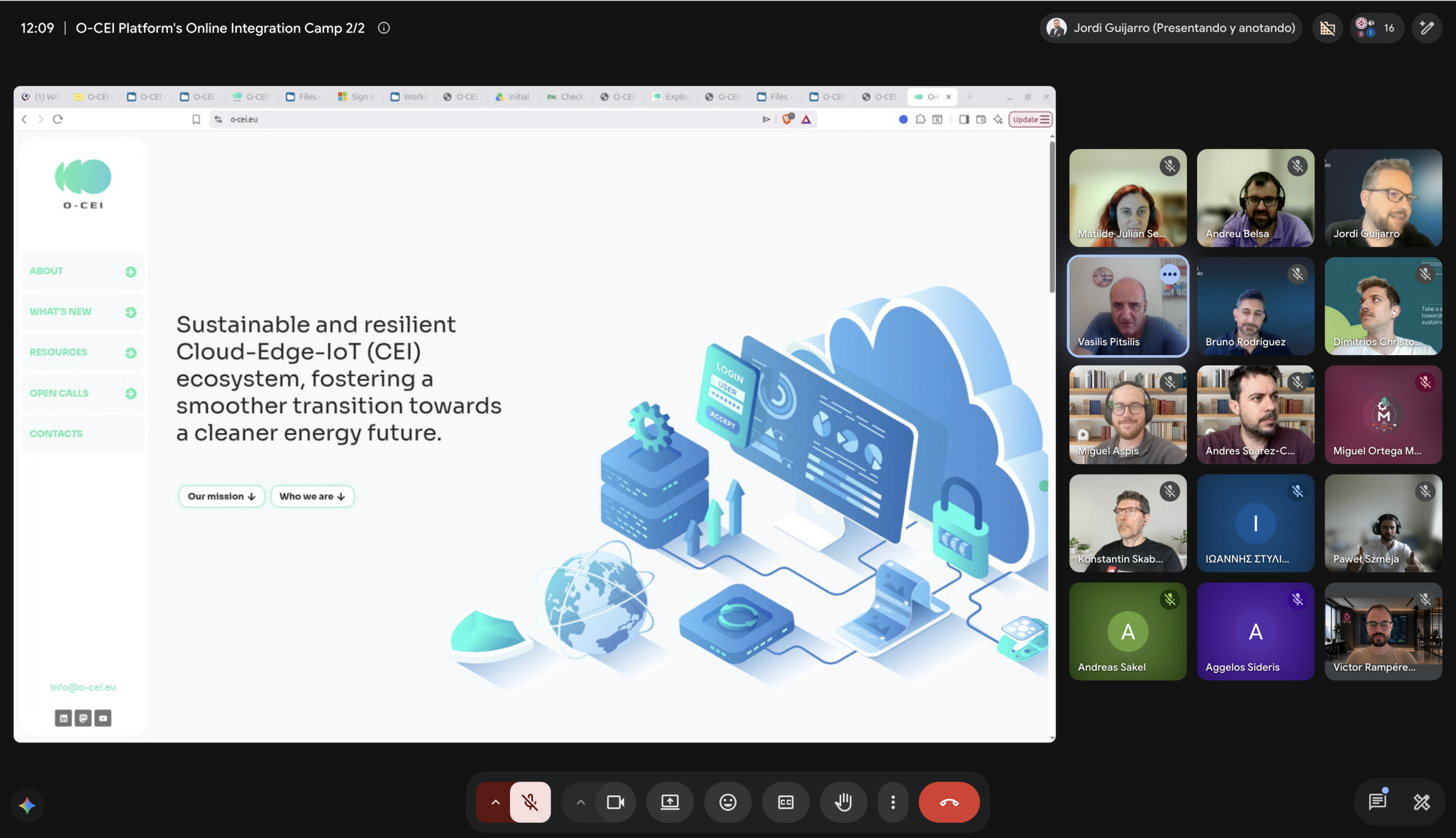
Between June 30 and July 2, 2026, the O-CEI project consortium successfully hosted its first Online Integration Codecamp. This highly collaborative, two-day hands-on event brought together technical partners and platform architects with a singular mission: to accelerate, wire, and validate the core architectural building blocks of the O-CEI Platform into a fully functional end-to-end Minimum Viable Product (MVP).
Designed to support Deliverable D3.1 and pave the way for pilots and the second Open Call, the Codecamp provided a live pre-production testing ground for the next generation of cloud-edge-IoT orchestration in Europe.
Day 1: Bridging the Control Plane & TM Forum API Integrations
The first day of the Codecamp focused on establishing a robust, vendor-agnostic infrastructure baseline and aligning core control plane components. Technical teams evaluated the live testing environment, mapped integration workflows, and kicked off crucial component alignments.
Key milestones achieved on Day 1 included:
- The New Marketplace Deployment: The technical team deployed a brand-new iteration of the O-CEI Federated Marketplace. Working in parallel with the initial proof of concept, this new environment allows partners to build, publish, and test real, deployable blueprinted offers from scratch.
- Unified Portal-Marketplace Navigation: Collaborators mapped out the integration between the React-based O-CEI Portal and the Marketplace backend. This effort included configuring decentralized Single Sign-On (SSO) using Decentralized Identifiers (DIDs) and Verifiable Credentials (VCs).
- Infrastructure Sovereign Alignment: Led by XLAB, partners reviewed GitOps deployment mechanisms using ArgoCD. Crucially, the team drafted a pathway to replace proprietary cloud components (such as AWS-native services) with open-source, non-proprietary alternatives. This ensures that the platform remains highly portable as it transitions toward a sovereign European host environment.
Day 2: Activating the Execution Plane & Sovereign Dataspaces
Day 2 transitioned from design and alignment to active “execution plane” coding and technical showcases. The consortium split into parallel hacking tracks to validate Southbound Connectors, the software engines translating high-level marketplace intents into real-world computing infrastructure deployments.
Highlights of the technical breakthroughs included:
- Multi-Continuum Southbound Connector Demos:
- Eclipse aeriOS: Partners witnessed a live, end-to-end demo showing an application container deploy, status query, and clean undeploy across a multi-domain test continuum, executed entirely via the aeriOS APIs.
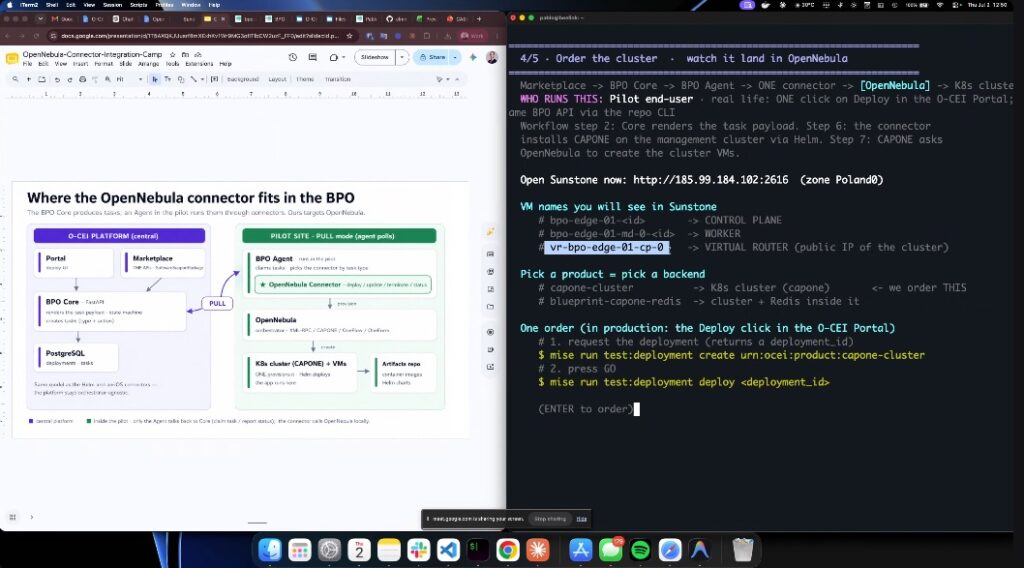
- OpenNebula (CAPONE): Technical architects demonstrated the automated deployment of virtual resources, control planes, and worker nodes triggered dynamically via the BPO (Blueprint Product Operator) agent.
- Nuvla: Developers mapped out the structural relationships between the high-level BPO and Nuvla’s edge-management interfaces to bring edge devices into the O-CEI unified ecosystem.
- Sovereign Dataspace Demonstrations: Day 2 concluded with a deep dive into FIWARE’s Data Space Connector. The technical demo successfully showed how data providers can safely register and publish datasets and context APIs as governed assets, enabling consumers to query live telemetry streams securely without sacrificing local raw data sovereignty.
The Road to September: Enabling Our Pilots and Open-Callers
The successful completion of the Codecamp marks a vital step forward for the O-CEI ecosystem. With established roadmaps for testing common APIs, stabilizing data models, and bridging remote orchestrators, the project is on track to deliver its functional MVP by late summer.
This platform will serve as the technical backbone for our validation pilots and open-callers, helping to eliminate fragmentation across the European Computing Continuum and ushering in a smarter, more resilient energy future.