
OCX (Open Community Experience) 2026 organized by Eclipse Foundation

Loading Events

EVENT

OCX (Open Community Experience) 2026 organized by Eclipse Foundation

DETAILS

Date & Time

April 22

Event organiser

Event website

SUMMARY

Trialog presentation on the use of the Hourglass Model in the Open Community for Research track of the OCX 2026 meeting

Antonio Kung, Cécile Rabrait, Léo Cornec, Diana Jimenez-Bejarano and Estibaliz Arzoz Fernandez from Trialog will present a talk entitled Using the Hourglass Model for Open Source Development in Research”.

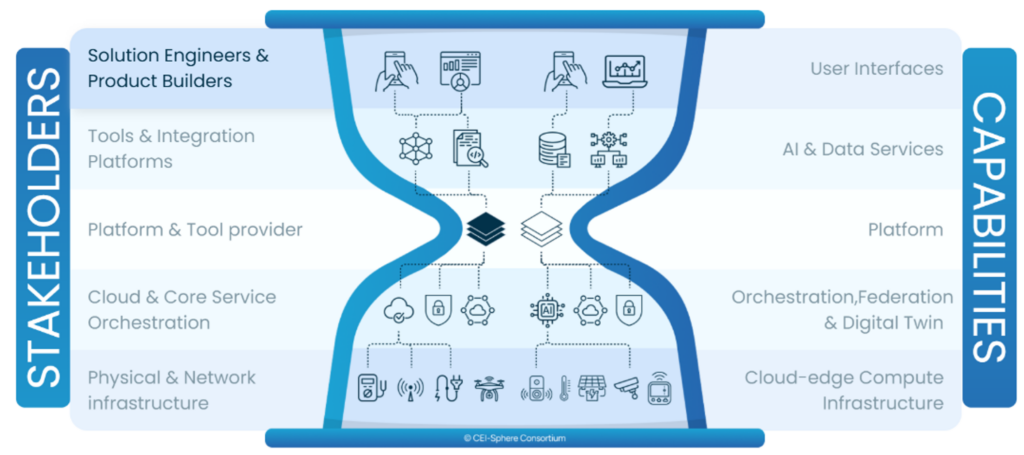
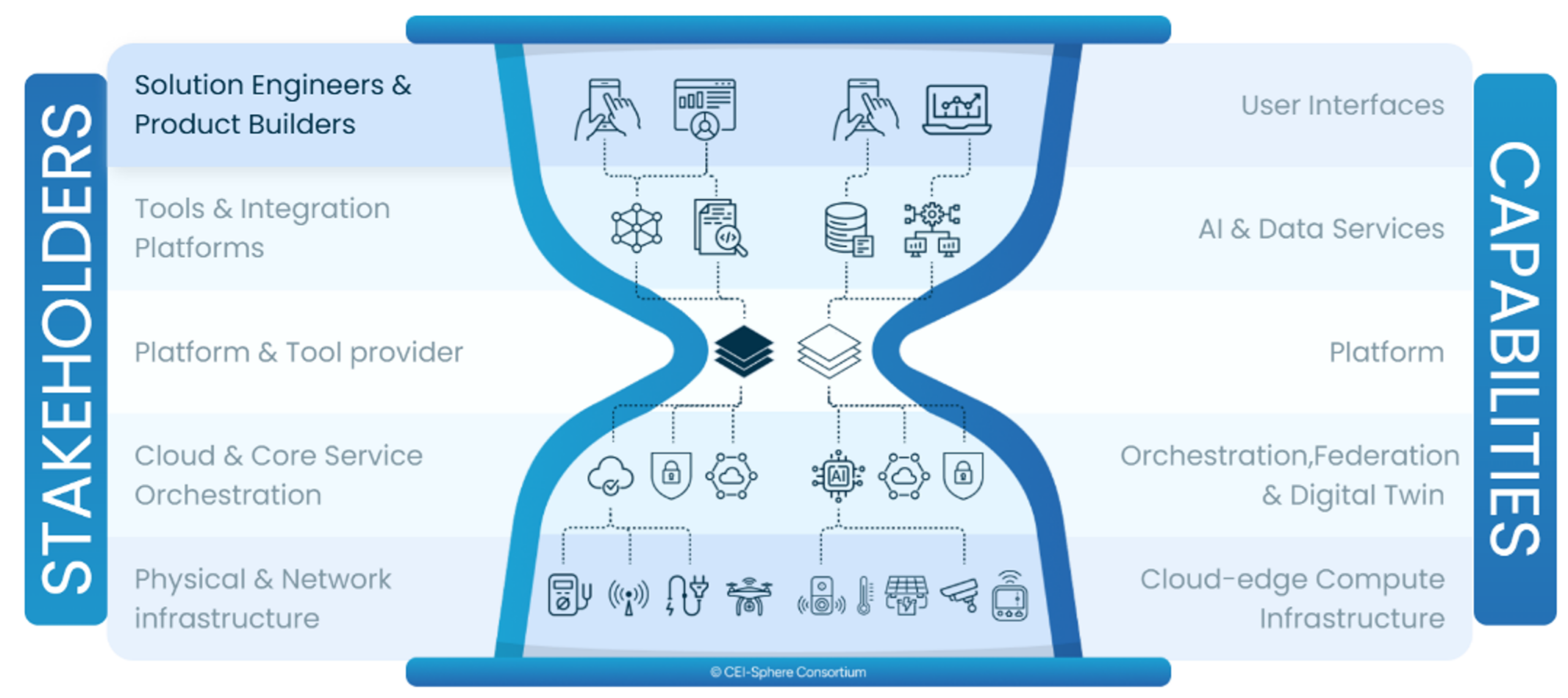
The objective of this talk is to show how the Hourglass Model, adapted by CEI-Sphere to study ICT ecosystems, can lead to the identification of Open Source opportunities in research projects. The Hourglass Model provides a visual map, organised into layers and dual-sided columns to illustrate the relationships between stakeholders on one side, and technologies on the other side. The “technologies” column is further refined into three aspects, capabilities, standards, and Open Source building blocks.

The following link describes the Hourglass Model and its application to the CEI ecosystem in the CEI-Sphere project: https://ceisphere.eu/hourglass-model.

The Hourglass Model has been applied successfully in the past 6 months in a growing number of research projects or ecosystems. In particular, this model has already been used to describe the following ecosystems: data spaces, digital twins, self-sovereign identity, AI, and smart cities.

This talk will explain the five principles driving an Hourglass Model analysis: layering key enablers, ensuring interoperability and reusability, supporting regulations and harmonized standards, leveraging standards and Open Source components, and the four processes defined within CEI-Sphere to help projects performing this analysis.

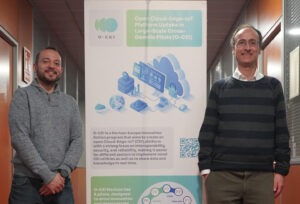
Then, several cases of Hourglass Model usage to enable the identification of Open Source opportunities in different EU-funded projects will be presented, including the Cloud-Edge-IoT O-CEI project focusing on the development of a digital asset builder system. For each of these projects, we will present the project’s strategy regarding Open Source and standardisation activities, the main Open Source building blocks used or targeted for use in the project as well as lessons learned and recommendations for other research projects.
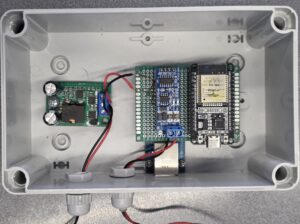
Advanced Microturbines

Can you briefly introduce your company and what you do?

Advanced Microturbines Srl is an Italian deep-tech SME specialised in the development of compact microturbine technologies for energy recovery and self-powered monitoring systems. The company designs and manufactures high-efficiency microturbines from 50 W to 50 kW capable of converting pressure drops in gas and water networks into electricity, enabling autonomous power supply for IoT sensors and digital infrastructure. Its solutions support the digitalisation and sustainability of energy and industrial systems by transforming unused pressure energy into a reliable source of power for remote monitoring applications. By combining microturbine technology with smart IoT systems, we deliver innovative solutions that support smart infrastructure, improve energy efficiency, and enable decentralised energy systems.

What challenge are you addressing under the O-CEI Horizon’s first Open Call, and how is your proposal relevant to the challenge?

Our proposal addresses the challenge of enabling transparent, secure, and real-time management of energy flows in decentralised energy systems, particularly in emerging smart microgrids. As renewable generation becomes increasingly distributed, local energy communities require reliable mechanisms to measure, validate, and share energy data between multiple actors. However, current infrastructures often rely on centralised systems, not distributed ones.

The ENTRUST solution tackles this challenge by developing an edge-validated blockchain platform for energy transactions. The system integrates IoT metering, edge computing, and blockchain notarisation to create a distributed architecture capable of securely validating energy data close to where it is generated. This approach enables real-time, low-latency processing while ensuring data integrity and transparency through blockchain mechanisms.

By combining edge processing with blockchain-based verification, the proposed platform allows microgrid participants, including households, local producers, and community operators, to securely record and validate energy exchanges. This contributes directly to the goals of the O-CEI Horizon’s Open Call by supporting decentralised, trustworthy, and scalable digital infrastructures for energy communities and smart grids.

What is the expected impact of your proposal?

The expected impact of the proposal is the development of a secure and transparent operational layer for decentralised energy systems, enabling more efficient management of renewable energy within local microgrids.

Through the integration of IoT metering, edge computing, and blockchain notarisation, the ENTRUST platform allows energy transactions and operational data to be securely recorded, validated, and shared in real time. This improves transparency and trust among microgrid participants while ensuring the integrity of energy data used for operational decisions and potential energy trading mechanisms.

The project will demonstrate the solution in the Krk Island pilot, showing how local communities can manage renewable energy generation and consumption more effectively. By enabling tamper-proof data validation and automated smart-contract processes, the platform supports fair and auditable energy exchanges between producers, consumers, and community operators.

Beyond the pilot, the modular and scalable architecture of ENTRUST allows the platform to be replicated in other energy communities and distributed energy systems across Europe. In this way, the project contributes to the broader objectives of the European energy transition, supporting the integration of renewable energy, strengthening local energy resilience, and enabling new models of transparent and decentralised energy management aligned with EU climate and energy policies.

Company website: www.microturbines.it